
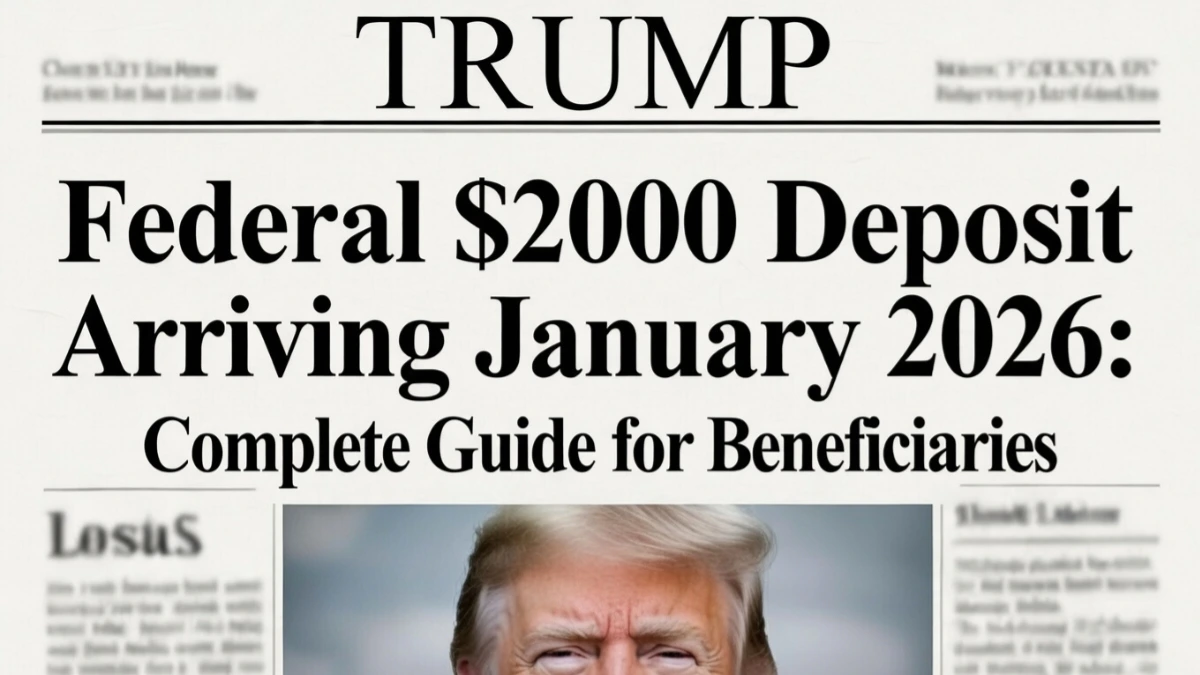
As January 2026 comes closer, a claim about a federal $2,000 direct deposit has started circulating widely on social media, messaging apps, and video platforms. Many posts confidently state that the US government has approved a new payment and that money will soon arrive in bank accounts. For families facing high rent, medical costs, and everyday inflation, this news feels hopeful and believable. However, repeated online claims do not always reflect real government decisions, which is why it is important to understand where this story came from and what the facts actually are.
How the $2,000 Payment Story Started
The idea of a $2,000 federal payment is closely linked to the pandemic years. In 2020 and 2021, Americans received multiple stimulus checks, often with short notice. Those payments created a strong public memory, and the amount $2,000 became a symbol of emergency financial help. Even years later, that expectation remains strong. Whenever economic pressure rises, similar claims tend to resurface online.
Recently, parts of political speeches and policy discussions have been shared without proper explanation. Early ideas such as tax rebates or economic relief proposals were taken out of context and presented as final decisions. As these posts spread, speculation slowly turned into firm belief, even though no official approval ever took place.
Official Position of the US Government
Despite the growing online chatter, no federal agency has announced a universal $2,000 direct deposit for January 2026. The IRS, US Treasury, and Social Security Administration have not released any notice confirming such a payment. There is also no bill passed by Congress and no budget allocation supporting a nationwide deposit of this size.
Large federal programs always follow a clear process. Public debates, draft legislation, budget reviews, and official announcements usually happen well in advance. Since none of these steps are visible, experts agree that the absence of paperwork itself is a strong sign that the claim is not real.
Why Many People Expect Money in Early 2026
Early 2026 overlaps with tax season, which adds to the confusion. Millions of Americans receive tax refunds during this period. For those eligible for refundable credits, refunds can reach or exceed $2,000. When these deposits appear with a “US Treasury” label, they are sometimes mistaken for stimulus payments.
In some cases, benefit adjustments, delayed refunds, or back payments also arrive around the same time. These payments are legitimate but apply only to specific individuals, not everyone.
Risk of Scams and False Messages
Whenever payment rumors spread, scams often follow. Fake emails and messages claiming to help people “unlock” the January 2026 payment have already appeared. These messages usually ask for personal or banking details. Federal agencies have clearly warned that they do not contact people through unsolicited texts or social media.
What to Expect Going Forward
If a real federal payment were approved, it would be announced publicly and clearly. Most analysts believe any future relief would be targeted rather than universal. Until official confirmation appears, the safest assumption is that no federal $2,000 deposit is scheduled for January 2026.
Disclaimer:
This article is written for general informational purposes only and is based on publicly available information at the time of writing. It does not provide financial, legal, or tax advice. Government policies and payment programs may change. Readers are advised to check official US federal agency websites or consult qualified professionals for guidance related to their individual circumstances.

